
California Contractor License Bond Claims: What Comes Next?
A CSLB complaint doesn't automatically lead to a payout or license consequence; a formal bond claim follows a separate claim process.
First, identify who sent the notice: the surety company, the Contractors State License Board (CSLB), or a court. Each handles a different part of the dispute.
Start with the notice, gather your records, and track each deadline separately. This is general information, not legal advice; outcomes depend on the facts, bond terms, and applicable law.
Key Takeaways
Your bond protects eligible injured parties, but it doesn't remove your financial responsibility.
- Bond claims go directly to the surety that issued the bond. CSLB handles licensing complaints, not claims against surety companies.
- If the surety pays a valid claim, you must reimburse the surety under your indemnity agreement. That agreement determines whether additional costs are recoverable.
- A complaint alone doesn't suspend your license. Bond cancellation, inadequate bonding, or licensing discipline can create separate suspension risks.
Keep your claim response and license compliance moving together. Resolving one doesn't automatically resolve the other.
Complaint or Bond Claim?
CSLB handles licensing violations
The CSLB complaint process addresses alleged violations of Contractors License Law. These can include abandonment, defective work, unlawful contracting practices, or unpaid obligations covered by the law.
CSLB may attempt mediation, investigate the facts, offer arbitration for eligible disputes, or pursue discipline. Its involvement doesn't guarantee financial recovery.
As a contractor, respond to the board's requests even when you're already discussing settlement with the customer.
The surety handles bond recovery
A bond claim asks the company that issued your bond to pay covered damages. The claimant contacts the surety directly, and the surety evaluates whether the bond covers the claimed losses.
CSLB doesn't process claims against surety companies. Our California contractor license bond guide explains the bond's role alongside your licensing requirements.
A consumer can pursue both routes. You may therefore receive separate notices about the same job, each with its own requested documents and response dates.
Who Can File a Claim?
Homeowners and contract claimants
Eligible claimants include homeowners damaged by qualifying violations of Contractors License Law. They also include any person damaged by a contractor's willful and deliberate violation of a construction contract.
A disagreement alone doesn't establish a payable claim. The claimant must show a covered violation and resulting financial loss.
CSLB's Bond Basics guidance explains that consumers contact the issuing surety directly to pursue recovery.
Employees and other creditors
Employees damaged by a contractor's failure to pay wages can also qualify.
Don't assume every unpaid invoice qualifies for license-bond recovery. Suppliers and subcontractors need a legal basis under the applicable bond and statute, not simply an outstanding balance.
Employee benefit-fund claims involve additional legal questions, including federal-law issues. Those disputes need individual legal review rather than a blanket promise of coverage.
How to File the Claim
A complete claim package helps the surety evaluate the matter and keeps the claim process moving. Missing records usually mean more questions and delays.
- Find the contractor's CSLB license record using the license number or business name. Open the bond information and identify the surety, bond number, and relevant coverage dates.
- Contact the surety's claims department. Request its claim form or written submission instructions, then describe the contractor, project, alleged violation, and amount sought.
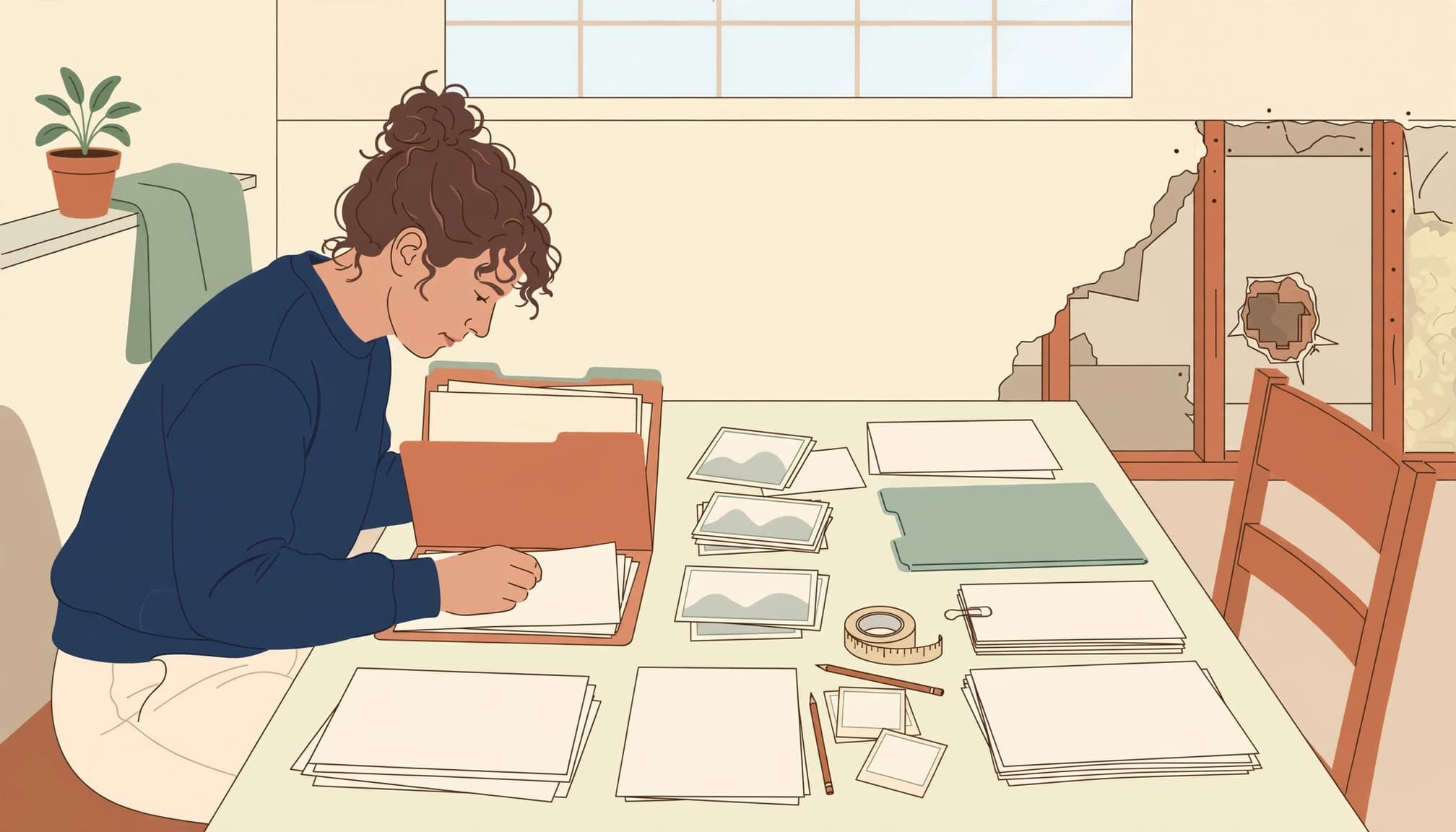
- Gather the contract, signed change orders, payment records, messages, dated photographs, inspection reports, and repair estimates. For wage claims, include hours worked and payment records.
- Submit an itemized loss calculation with supporting documents. Keep copies and request a claim number and assigned contact.
- Answer follow-up requests and track filing deadlines separately. A pending claim or CSLB complaint doesn't necessarily preserve your right to sue.
For repair disputes, competing written estimates help separate necessary corrections from upgrades or unrelated work. Photograph conditions before repairs change the evidence.
Contractors should organize the same records before responding. Include approved changes, payments received, access problems, inspection results, and written offers to correct the work.
What the Surety Reviews
Coverage and financial loss
The surety investigates whether the allegations fall within the bond's legal obligations. It also reviews the claimed loss and supporting evidence.
You may receive requests for a written response, project records, payroll documents, or explanations of disputed charges. Answer with dates and documents, not accusations.
Payment, denial, or further review
The surety may pay a covered claim, deny an unsupported claim, request more information, or address the dispute through settlement or litigation.
A contractor's objection doesn't automatically prevent payment. Your indemnity agreement may give the surety authority to settle claims, subject to applicable law.
Likewise, a CSLB finding or arbitration award against the contractor doesn't automatically require the surety to pay. Bond liability still needs a separate legal basis.
Keep settlement discussions coordinated. A private payment should include appropriate written terms so everyone understands which claims are being resolved.
Deadlines, Timing, and Costs
California's lawsuit deadline
Under Business and Professions Code section 7071.11, the deadline for contractor license bond claims is generally two years after the license period in which the act or omission occurred expires.
Different provisions may apply if the license was inactivated, canceled, or revoked. Wage-related claims also have separate timing rules.
The 2026 Contractors License Law book contains the governing statutes. Don't assume every deadline is two years after the job ended.
Submitting paperwork to the surety doesn't preserve a lawsuit deadline. Get legal help if a deadline is close or disputed.
Claim expenses and delays
There isn't a guaranteed payout schedule for contractor license bond claims. Complete records can shorten a review, while disputed coverage, competing claims, or litigation can extend it.
A 30-day or 60-day estimate isn't a guaranteed payment deadline.
Filing a CSLB complaint is free. Repair estimates, expert reports, court filing and service, and attorney assistance may involve separate costs. Whether you can recover those costs depends on the legal claim and any resulting agreement or judgment.
If the Surety Pays
You must reimburse the surety. A bond isn't insurance that absorbs your covered loss without repayment.
The indemnity agreement signed when the bond was issued establishes your reimbursement duties. Depending on its terms, you may owe claim payments, investigation expenses, legal costs, and other charges.
California requires a $25,000 contractor license bond. That amount is the bond's liability ceiling, often called its penal sum, not money held in your account.
It also isn't a guaranteed $25,000 recovery for every claimant. Statutory limits, other claims, and prior payments can affect what's available.
Paying your bond premium doesn't pay off a future claim. The premium purchases the surety's guarantee, while indemnity creates your reimbursement obligation.
Request an itemized reimbursement demand, then review it against the indemnity agreement. If immediate payment isn't possible, discuss repayment arrangements with the surety. It isn't required to accept installments.
A paid claim can also affect future underwriting. Higher premiums, collateral requirements, or fewer available carriers are possible, depending on your financial condition and claim history.
Protect Your License Status
Cancellation starts a separate clock
A complaint, surety claim, or unpaid reimbursement demand alone doesn't automatically cause license suspension. Bond cancellation creates a separate compliance issue.
A California license bond is canceled 30 days after CSLB receives the cancellation notice. If CSLB hasn't received a reinstatement notice or replacement bond within that window, the license is suspended.
That period runs from CSLB's receipt of the notice, not the day you open the letter.
CSLB's bond-suspension guidance describes reinstatement documents. Other reinstatement timing rules don't extend the initial cancellation window.
Renewal needs its own calendar
Bond renewal and license renewal often fall on different cycles. Renewing your license doesn't automatically renew your bond.
Arrange a replacement or renewal bond about four weeks before expiration. Treat that as a planning buffer, not a statutory grace period.
Our California license renewal guide covers the related filing steps. Claim payments that reduce the required bond amount can also create a suspension issue unless the required bonding is restored.
Replacing a bond doesn't erase liability under the earlier bond.
What CSLB Can Do Next
Mediation, court, and arbitration
CSLB may try mediation before moving a complaint further. If mediation fails, the contractor has no history of repeated acts, and financial injury is less than $12,500, CSLB may provide information about small claims court and license-bond recovery.
That threshold applies to CSLB's referral process, not the license bond's maximum payout. Small claims court has separate limits.
CSLB administers mandatory arbitration for eligible disputes involving $25,000 or less. Its voluntary program covers eligible disputes above $25,000 through $50,000.
Eligibility involves more than the dollar amount. The CSLB complaint process describes these options and the board's enforcement role.
Citations and disciplinary bonds
CSLB citations may carry civil penalties of up to $30,000, depending on the violation. Orders of correction can require repairs or payment so someone else can correct the work.
Those consequences don't determine whether the surety pays a claim. CSLB's contractor complaint response guidance explains potential enforcement outcomes.
After qualifying license discipline, CSLB may require a disciplinary bond as a condition of returning to licensed work. The bond must be at least $25,000, cannot exceed 10 times the contractor license bond, and must remain on file for at least two years.
A disciplinary bond is additional security. An ordinary complaint doesn't automatically trigger that requirement.
Claims Against Cash Deposits
Some contractors satisfy the bonding requirement with a cashier's check deposited with CSLB instead of a surety bond.
Recovery works differently. CSLB can release money from that deposit only under a court order.
The consumer must first file a civil action against the licensee and the deposit holder, identified by CSLB as the Contractors State License Board Registrar of Contractors. A complaint letter alone doesn't authorize payment.
For contractors, this distinction matters when explaining your financial security to a claimant. There may be no issuing surety claims department to contact.
A court claim against a cash deposit needs the correct parties and procedure. Legal assistance can help avoid filing against the wrong entity.
Other Bonds and State Rules
Don't apply another state's instructions to a California license-bond dispute. Project bonds have different obligations.
A performance bond supports project completion. After a covered default, the surety may arrange completion or take over the project under the bond's terms.
A payment bond protects qualifying subcontractors, suppliers, and laborers against unpaid covered obligations. Unlike a performance bond, it generally addresses those debts rather than completing construction. A performance bond's remedy concerns project completion, while payment addresses eligible debts.
In Arizona, the Registrar of Contractors accepts contractor complaints, while recovery against a surety bond is pursued with the surety. Cash-bond recovery involves separate court procedures. Arizona's contractor bond information explains its bonding system; covered surety damages remain subject to the bond limit.
Florida's Little Miller Act, section 255.05, governs public-project payment bonds. For qualifying claimants without a direct contract with the bonded contractor, including subcontractors but excluding laborers, notice generally must be given before work starts or within 45 days after first furnishing.
A separate notice of nonpayment generally must be served within 90 days after final furnishing. Suit generally must begin within one year after final labor or delivery, with exceptions including retainage.
These Florida requirements don't control California contractor license bond claims. Identify the state, bond type, and claimant category before relying on any deadline.
Reduce the Risk of Claims
Common default causes include overexpansion, poor management, weak accounting, cash-flow problems, and performance failures such as abandoning a job. Practical controls address those problems before they become claims.
- Keep signed scope changes, payment records, and daily job notes together. Record what changed, who approved it, and how it affected price or completion.
- Review payroll, supplier, and subcontractor balances, along with project cash flow, regularly. Don't accept more work than your crew, supervision, or finances can support.
- Address repair requests and schedule problems in writing. Give a realistic correction plan rather than leaving customers without a response.
When a claim arrives, preserve records immediately. Don't delete messages, alter invoices, or promise payment terms you can't meet.
We help contractors arrange required bonds and handle CSLB filing. Our role is to support your bonding needs; the issuing surety decides the claim.
If you need replacement or renewal bonding, Get quote today. Existing claim obligations still need their own response.
Frequently Asked Questions
Can I keep working during a claim?
Generally, yes, if your license remains active and you meet all licensing requirements. A pending complaint alone doesn't prohibit work.
If your license becomes suspended, you can't continue contracting as though it's active. Respond to cancellation and enforcement notices promptly.
Can small claims recovery exceed the bond?
California small claims court generally allows natural persons to seek up to $12,500, while many business claimants face a $6,250 limit.
The $25,000 license bond doesn't increase that limit or guarantee collection of a judgment.
Can I challenge the surety's decision?
Yes. Ask for the decision's legal and factual basis, then provide missing records or corrections.
Whether you can prevent payment or challenge reimbursement depends on the indemnity agreement, bond, and law. A construction attorney can assess disputed liability and settlement authority.
Keep the Claim and License Separate
A complaint needs a documented response. Your license needs continuous compliance, even while the dispute remains open.
Gather the records, answer each notice, and track the bond's status. Timely action gives you more room to address the claim before cancellation or enforcement creates another problem.
If replacement bonding is needed, start early. A new bond protects continuity, but it doesn't cancel your existing obligations.