


Contractor Professional Liability Insurance: Coverage
This coverage helps address claims that your professional services caused a client's financial loss. Claims can involve design mistakes, construction-management errors, or failures to provide agreed services, even when nobody is injured.
General liability doesn't cover every mistake. If you design systems, approve plans, or manage construction decisions, allegations may fall outside standard job-site coverage.
Start with the work you perform, then match each exposure to the right policy.
What Contractor Professional Liability Insurance Covers
Professional liability coverage addresses alleged negligence in covered professional services. It's also called errors and omissions insurance, or E&O. Malpractice coverage is another name, although it's less common in construction.
The policy's definition determines which activities qualify. A contractor policy doesn't automatically cover every service your business performs.
Financial losses from professional errors
Coverage may apply when a design error requires changes, an incorrect professional recommendation increases project costs, or negligent construction management causes financial harm.
These claims can involve economic loss without bodily injury or property damage. That distinction matters because general liability usually doesn't respond to a financial-loss claim alone.
Professional liability may also cover a failure to provide a covered service. However, an unpaid invoice, unhappy customer, or missed deadline isn't automatically an insured E&O claim.
Legal defense and covered damages
A covered claim may trigger payment for legal defense, settlements, or judgments, subject to the policy's terms.
You don't have to be proven negligent before defense costs arise. An allegation alone can require attorneys, document review, and expert analysis.
Some policies include defense costs within the liability limit. Those expenses reduce the amount left for settlements or judgments.
When Contractors Need Professional Coverage
Your activities matter more than your job title. A small specialty contractor can face professional liability exposure, while a larger contractor working strictly from supplied plans may have less.
Design-build and specialty design
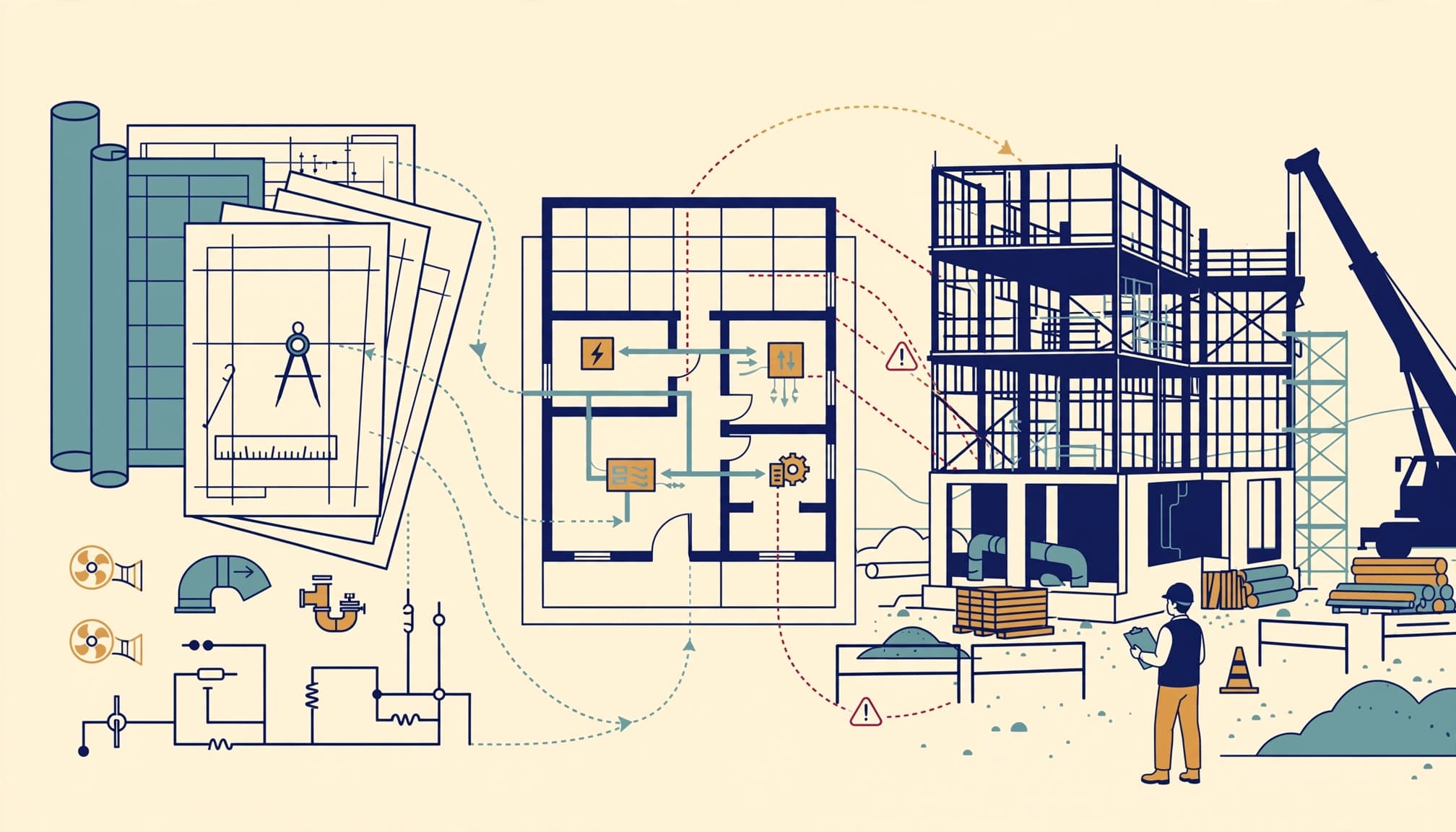
Design-build contractors combine construction responsibility with design obligations. General liability alone usually doesn't cover the professional liability tied to those services.
Plumbing, electrical, and HVAC contractors can also face claims when they design systems, select specifications, or calculate capacities. Installing a supplied design and taking responsibility for it are different risks.
Architects, engineers, and surveyors have clear professional exposure. Contractors who take on similar responsibilities can face related claims, even without a separate design firm.
Construction management and subcontracted design
Construction management firms may face allegations involving scheduling, estimating, coordination, inspection, or professional recommendations. Coverage depends on whether the policy's definition of professional services includes those tasks.
Hiring a designer doesn't automatically remove your responsibility. Subcontracting even a small mechanical, electrical, or plumbing design component can create vicarious liability, which means liability tied to someone else's work.
Your contract with the owner matters. If you promise to deliver a complete design-build project, the owner may pursue your business when a subcontracted design causes a loss.
A designer's own insurance helps, but it doesn't cover your business's separate exposure.
Professional, General, and Workers' Compensation
These policies handle different claims. Carrying one doesn't replace the others.
Professional liability addresses claims arising from covered professional services. Commercial general liability primarily addresses third-party bodily injury, property damage, and certain personal or advertising injury claims.
Workers' compensation covers employees' work-related injuries and illnesses. It generally pays benefits such as medical treatment and partial wage replacement, rather than a client's loss from a design mistake.
For example, a visitor injured by job-site materials may have a general liability claim. An employee injured while moving those materials is a different exposure. A client alleging negligent system design may bring a professional liability claim.
Our guide to California contractor general liability insurance explains the third-party protections that form the foundation of many contractor insurance programs.
Commercial auto addresses covered vehicle-related liability. Builder's risk protects a project against covered property losses during construction. Tools and equipment coverage protects insured property, not your professional judgment.
A contractor license bond or performance bond also has a different purpose. Bonds address defined obligations and can require repayment to the surety. They aren't substitutes for liability insurance.
Faulty Workmanship Isn't Automatically Covered
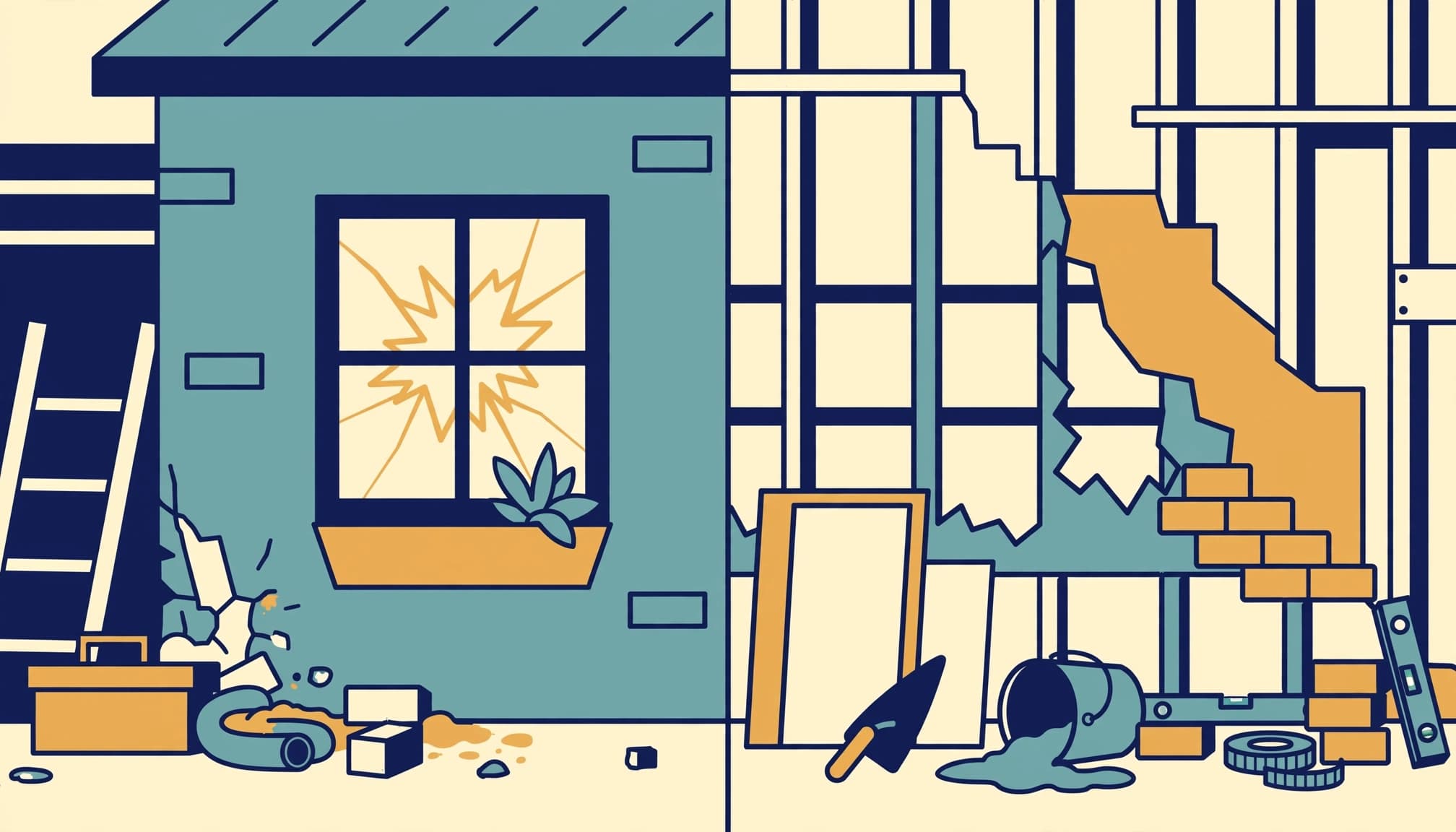
A mistake in physical installation and a mistake in professional design can lead to different coverage decisions. The resulting damage matters, too.
Repairing your own defective work
General liability commonly excludes the cost of correcting defective workmanship and damage to your own completed work. It isn't a warranty that pays whenever a customer requests repairs.
Replacing an improperly installed pipe may be an uninsured correction cost. That expense doesn't become a professional liability claim simply because the installation required skill.
Professional liability may respond to a covered design error, but it doesn't automatically pay every cost of removing or replacing defective construction. Rectification or mitigation coverage, where available, has its own terms.
Damage caused to other property
Defective work can cause separate damage. Water escaping from an improperly installed pipe may damage flooring, drywall, or other property.
That resulting property damage may fall within general liability coverage, depending on the facts, exclusions, and applicable law.
The standard completed-work exclusion may include a subcontractor exception. An endorsement may remove or change the subcontractor exception, which can alter the policy's scope.
A policy can cover damage to other property while leaving the cost of correcting the defective component uninsured.
The declarations and endorsement schedule show which forms apply. The actual exclusion wording determines the boundary.
How Professional-Services Exclusions Work
General liability policies commonly exclude professional services through endorsements. A contractor's commercial general liability policy can cover ordinary construction operations while excluding certain design or supervisory activities.
Older ISO forms illustrate the distinction. CG 00-01-12-07 carves certain professional design and supervisory obligations out of the definition of an "insured contract." That restricts contractual liability coverage, but it isn't a blanket exclusion from professional liability coverage by itself.
The older CG 22-43-07-98 endorsement excludes liability arising from defined activities, including supervision, inspection, and architectural or engineering work.
ISO forms commonly written as CG 22 79 and CG 22 80 take a more contractor-focused approach. Their wording preserves distinctions for construction means, methods, techniques, sequences, and procedures.
These are exclusion forms with exceptions, not separate E&O policies. They don't create broad coverage for design errors or pure economic loss.
IRMI's analysis of contractor professional liability explains how these exclusions interact with commercial general liability.
Form editions and insurer-specific wording differ. An older ISO number doesn't establish what a current policy covers.
An additional insured endorsement also doesn't remove an exclusion. It extends insured status only within the coverage the policy provides.
Claims-Made Coverage and Retroactive Dates
Contractor professional liability coverage is typically claims-made. Most contractor general liability policies are written on an occurrence basis.

When the claim reaches you
An occurrence policy generally responds based on when covered bodily injury or property damage happens. A claim can arrive years later, subject to policy terms.
With claims-made coverage, a claim generally must be first made during the policy period. Some policies also require reporting within a stated period.
The professional service can have happened earlier. The service and claim don't necessarily have to fall in the same policy year.
The Insurance Training Center's coverage-timing explanation describes this difference between occurrence and claims-made coverage.
Policy language also defines what counts as a claim. A written demand can trigger reporting duties before a lawsuit is filed.
Which earlier work qualifies
A retroactive date sets how far back eligible professional liability acts can reach. Acts before that date are generally outside coverage.
Keeping coverage active doesn't solve a retroactive-date problem. A new policy with a later date can leave earlier services outside its protection.
A lapse can also create a reporting gap. Continuity, reporting deadlines, and retroactive dates all matter when renewing or changing insurers.
Known claims and circumstances may be excluded even when the underlying work falls after the retroactive date. Prior-knowledge provisions prevent a new policy from automatically absorbing an existing dispute.
Limits, Deductibles, and Defense Costs
The liability limit is only part of your protection. Defense expenses and your share of a claim affect the money available.
Professional liability commonly uses a per-claim limit and an aggregate limit. The aggregate is the maximum available for covered claims during the policy period.
When defense costs sit inside the limit, attorney and expert expenses reduce the amount left for settlements or judgments.
A deductible or self-insured retention establishes the amount your business bears. A retention may require you to handle specified costs before the insurer's obligations begin.
For general liability, common contractor limits are $1 million per occurrence, $2 million general aggregate, and $2 million products/completed operations aggregate.
Many owners expect a $2 million aggregate. Higher-value contracts may require additional limits or excess coverage.
Those limits don't establish your professional-services limits. A standard umbrella also doesn't automatically extend over E&O.
Settlement-consent provisions matter, too. Some policies limit the insurer's responsibility if you reject a recommended settlement.
What Contractor Coverage Costs
General liability insurance prices provide a useful starting point, but they aren't professional liability prices. The policies cover different exposures and use different underwriting information.
NerdWallet's contractor insurance guide, citing Coverdash medians, says contractors below $10 million in annual revenue can typically get general liability coverage for less than $2,500 annually.
Its contractor general liability cost breakdown lists median annual premiums of $1,400 for remodeling and $2,200 for residential plumbing.
Those figures are benchmarks, not guaranteed quotes or estimates for this coverage.
Pricing depends on professional-services revenue, design responsibility, project types, claims history, limits, and the deductible or retention.
Subcontracted design still affects the exposure. A contractor that hires engineers may retain contractual responsibility for their work.
A complete application identifies the services your business performs and the responsibilities it accepts. Clear descriptions help match your operations to the quoted policy.
We help California contractors arrange general liability, workers' compensation, and commercial auto coverage. Our contractor insurance options and costs explain how those policies support different contract requirements.
California Claims Can Arrive Later
In California, completing a project doesn't immediately end your potential liability. Construction disputes can arise well after the final inspection or payment.
California's Code of Civil Procedure section 337.1 generally provides a four-year outer period for actions involving patent construction deficiencies. Patent defects are apparent through reasonable inspection.
AIA California's explanation of design lawsuit deadlines describes the four-year period and its relationship to substantial completion.
For latent deficiencies, meaning hidden defects, CCP section 337.15 generally establishes a ten-year outer limit after substantial completion. The California statutory text for latent defects sets out that rule and its exceptions.
These aren't guaranteed filing windows for every construction dispute. Shorter deadlines, exceptions, and other laws can apply.
A legal deadline also doesn't determine whether an insurance policy responds. Claim timing, covered services, exclusions, and reporting requirements remain separate questions.
This is general information, not legal or insurance advice. Coverage depends on the issued policy and the claim's facts.
Read the Policy Before Starting
A certificate of insurance summarizes professional liability coverage, but it doesn't amend exclusions or prove every contractual obligation is insured.
The declarations, coverage form, and endorsements contain the operative terms. Focus on these four areas:
- Match the professional services definition to your actual responsibilities, including design, estimating, inspection, and construction management.
- Read the named-insured wording and subcontracted-services provisions to understand whose work can trigger coverage.
- For claims-made coverage, identify the retroactive date, claim-reporting deadline, deductible or retention, and treatment of defense costs.
- Review exclusions for contractual liability, warranties, pollution, prior knowledge, and services outside the policy's scope. Check for any subcontractor exception.
A contract can create obligations broader than insurance covers. A promise to guarantee project performance or assume another party's liability may exceed coverage for your own negligence.
Certificates of insurance from design subcontractors are useful records, but they don't prove your policy covers vicarious liability. Keep their contracts and insurance documents with your project files.
We review contract insurance requirements for the coverages we arrange. That helps you align your general liability protection with project demands before work starts.
Key Takeaways
- Professional liability can cover financial-loss claims arising from covered professional services, even without injury or property damage.
- General liability and workers' compensation address different risks and provide separate coverage.
- Subcontracted design on a design-build or construction management project can leave your business exposed. Claims-made timing and exclusions affect whether errors and omissions coverage responds.
The strongest protection starts with an accurate description of your work. Your trade name alone doesn't show whether you accept design or management responsibility.
Frequently Asked Questions
Is professional liability required for contractors?
It depends on your services and contract. No single professional liability requirement applies to every contractor.
Design-build and construction-management contracts commonly create professional exposure. An owner may require errors and omissions (E&O) coverage even when your business subcontracts the design.
Does E&O cover every missed deadline?
No. A delay allegation must involve covered professional services and meet the policy's terms.
Contract penalties, performance guarantees, and ordinary business disputes may be excluded. A missed deadline alone doesn't establish covered professional negligence.
Can general liability cover a design mistake?
A professional-services exclusion may bar coverage, even when a design mistake causes property damage.
Means-and-methods wording can preserve coverage for certain construction activities. It doesn't replace professional coverage for design responsibility.
Does builder's risk pay for defective work?
Not automatically. Builder's risk covers specified property losses during construction, subject to exclusions.
Some forms address resulting damage, but neither builder's risk nor tools coverage guarantees payment to correct faulty workmanship.
Get Coverage Matched to Your Work
Contractor professional liability insurance helps address professional-service claims that standard job-site coverage can miss. Covered services and policy timing matter as much as the stated limit.
Keep your design responsibilities, construction operations, and employee exposures separate when choosing coverage. That makes each policy's job clear.
Send us your contract's insurance requirements and a description of your operations. Get quote today for the contractor coverages we arrange, with practical help matching protection to your work.