
California Contractor Permit Bonds: Local Requirements
Your $25,000 CSLB bond doesn't automatically satisfy a city or county permit requirement. California contractor permit bonds depend on the issuing agency and your project, so getting the right bond starts with identifying the work being permitted.
Some projects need separate security for street restoration, excavation, grading, or public improvements. Others don't require a local bond at all.
We'll help you separate the requirements, understand the cost, and get the right information into your bond application before filing.
Key Takeaways
California's statewide contractor license bond is a $25,000 bond, while local permit bonds cover agency-specific permit conditions.
- California doesn't have one statewide permit-bond requirement covering every city, county, and construction project.
- An agency may require a fixed bond amount or calculate it using an approved construction estimate.
- Before ordering, confirm the required form, amount, obligee, and filing process directly with the issuing agency.
- You pay a premium for a surety bond, not the full bond amount. You may still have to reimburse the surety for a claim it pays.
When California Contractor Permit Bonds Apply
Local agencies can require a bond when permitted work creates financial exposure for public property or required improvements. The bond gives the agency security if the permit holder fails to meet the covered obligations.
Work in public areas
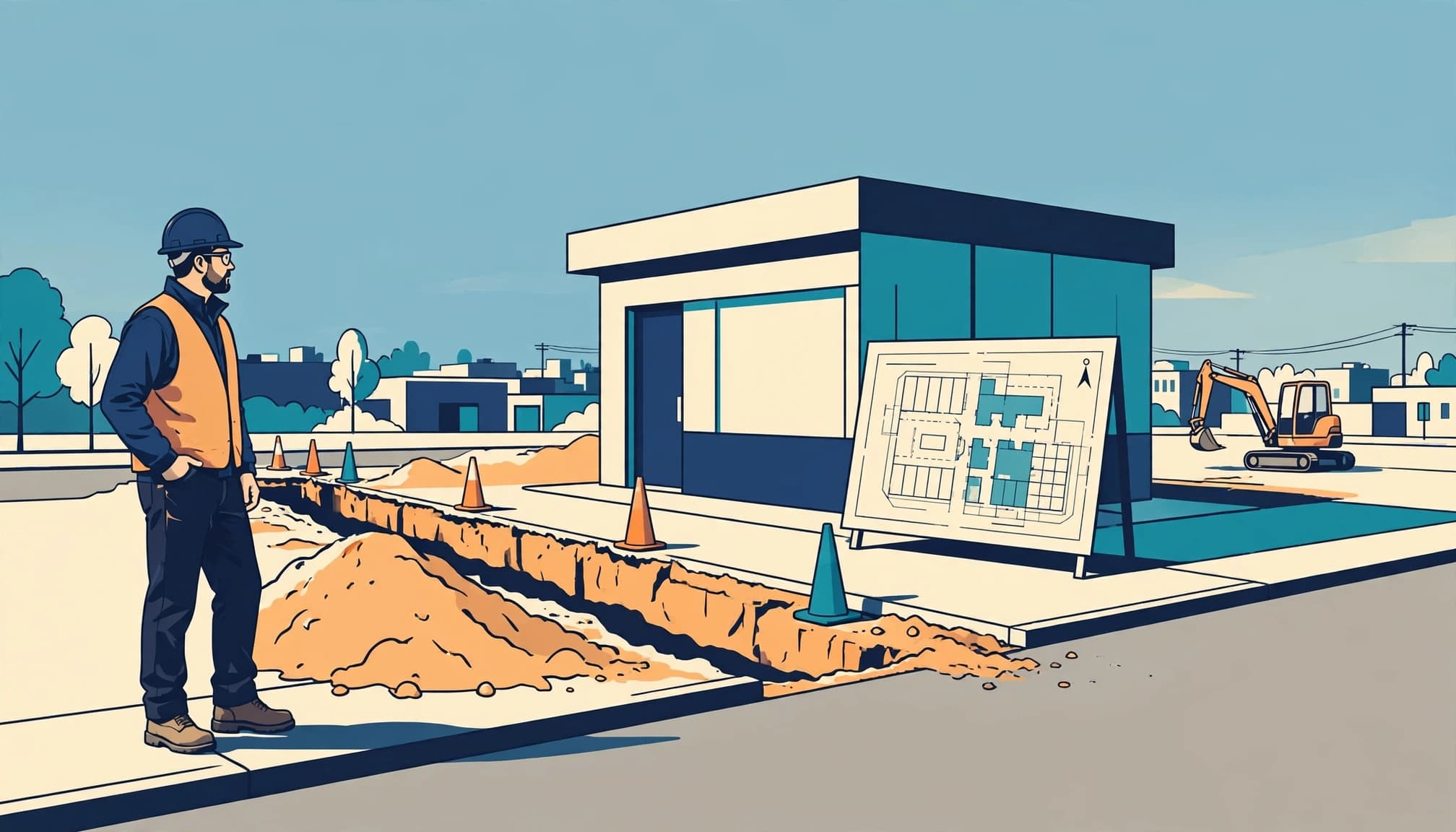
Excavation, utility connections, sidewalk replacement, and street work can involve public right-of-way permits. Depending on the agency's requirements, security may cover completion, pavement repair, or restoration of disturbed areas.
Fremont's encroachment permit guidance identifies work on public streets and sidewalks as generally requiring an encroachment permit. That permit requirement alone doesn't establish that every applicant needs a bond.
State-highway work involves a different authority. Caltrans' encroachment permit procedures address construction within state highway right-of-way.
Grading and required improvements
Grading or improvement approvals may also include security requirements. The obligation could involve completing approved improvements, stabilizing disturbed ground, or addressing work left unfinished.
The controlling details come from the permit conditions and required bond form. Don't assume a requirement carries over from your previous project, even when the work looks similar.
A building permit doesn't automatically mean a permit bond is required. The project scope and agency's rules determine whether additional security applies.
Separate License, Permit, and Project Bonds
These bonds can appear on the same job, but they cover different obligations. Buying one doesn't automatically satisfy the others.

Your CSLB license bond
The standard California contractor bond for state licensing is a $25,000 bond, effective January 1, 2023, under Senate Bill 607. It addresses eligible losses arising from violations of California Contractors License Law.
The Contractors State License Board (CSLB) requires an acceptable contractor license bond before an active license can be issued, reactivated, or renewed, as explained in the CSLB's bond requirements. The surety must be licensed through the California Department of Insurance.
That bond follows your license. It isn't automatically security for a particular city's street restoration requirement.
Our California CSLB bond requirements guide covers the state licensing side separately.
Local permit and project bonds
A permit bond addresses obligations stated in the permit and bond form. The obligee is typically the city, county, or other agency requiring it.
Project bonds address the construction contract. A performance bond backs covered completion obligations, a payment bond protects eligible labor and material claimants, and a bid bond backs the bidder's commitments.
An agency may call its permit security a "faithful performance bond." The title alone doesn't tell you its scope. Read the required form and identify which obligation it covers.
Local Bond Amounts Aren't Uniform
California contractor permit bonds don't share a universal dollar amount. An agency may use a scheduled amount, an approved estimate, or another calculation stated in its requirements.
Mountain View's excavation requirement
Mountain View provides a concrete example. Its excavation permit requirements state that a faithful performance bond may be required, with the amount equal to 100% of the approved construction estimate.
That wording matters. The requirement is conditional, and the calculation uses the approved estimate.
You can't substitute the $25,000 CSLB license bond simply because it is already active. The agency's required security addresses a separate obligation and may have a different amount.
Fixed amounts versus estimates
A fixed-amount requirement gives you the penal sum directly. An estimate-based requirement needs the agency's accepted calculation before the bond can be written correctly.
Changes to the approved scope or estimate may affect the required security. Carry the approved amount into your quote request rather than using an early bid figure.
The penal sum is the bond's stated financial limit, subject to its terms. It isn't the premium you pay, and it doesn't cap every contractual or legal obligation your business may have.
Confirm Four Details Before Ordering
Get the agency's requirements before purchasing the bond. That avoids paying for a document that doesn't match the permit.

Confirm these details directly with the issuing agency:
- Obtain the required bond form, including any special conditions or endorsements.
- Get the exact bond amount and any approved estimate used to calculate it.
- Identify the full legal obligee name and the permit holder who must appear as principal.
- Establish the required effective date, signatures, supporting documents, and submission method.
The principal is the party responsible for the bonded obligation. That may be your contracting business, but a permit can identify a property owner, developer, or another applicant instead.
The obligee is the party requiring the bond. The surety is the company issuing the financial guarantee.
Use the names shown in the agency's documents. A shortened city name, incorrect business entity, or missing permit number can cause rejection.
Send the required form and permit information with your quote request. We can use those documents to match the requested bond rather than treating a local requirement like a standard CSLB filing.
What Contractor Bond Cost Includes
You don't normally pay the full penal sum to purchase a surety bond. You pay a bond premium, with any collateral requirement handled separately.
License-bond pricing
Our standard California contractor license bonds cost $139 to $2,500 per year. Your rate depends on underwriting by the surety company, including a credit check, prior claims, and eligibility rules.
That range applies to the standard license bond. It isn't a price schedule for local excavation, grading, or improvement bonds.
We shop multiple carriers to find a competitive rate for your application. The goal is a bond that meets the requirement without unnecessary expense.
You can verify a surety company's authorization through the California Department of Insurance. This checks company credentials, not pricing.
Permit-bond pricing
A permit-bond quote depends on the required amount, form, duration, and covered obligation. Credit and business financial information may also affect approval.
A short-duration restoration obligation and a larger improvement obligation can require different underwriting. Some applications need financial statements, project information, or collateral before approval.
The premium also needs to be read alongside its term. A first-year price doesn't tell you the total cost if the agency keeps the bond in place longer.
There isn't one reliable statewide contractor bond cost for permit bonds. Our surety bond basics guide explains how the guarantee and your financial responsibility work.
File With the Right Agency
A correctly issued bond still needs to reach the right recipient. CSLB filing and local permit filing are separate processes.
For a contractor license bond, the business name and license number must match CSLB records. The bond must use the Attorney General-approved form and carry the surety attorney-in-fact's signature. Confirm the surety company is authorized by the California Department of Insurance.
CSLB must receive an acceptable bond at its Headquarters Office within 90 days of its effective date. That receipt deadline doesn't authorize work while a required license bond is missing.
For a local permit bond, follow the issuing agency's submission requirements. Depending on the process, the packet may include an original bond, electronic submission, power of attorney, or other supporting documents.
Keep the bond number, effective date, and a copy of the submitted packet in your project file. Also retain the agency's acceptance correspondence. Paying the premium doesn't establish that the agency accepted the bond.
Don't change an executed bond yourself. Corrections to names, amounts, dates, or permit references must be handled through the issuing surety.
We provide same-day CSLB filing for many license bonds. Local permit acceptance follows the local agency's process, so don't assume that service also completes your municipal filing.
Additional CSLB Bonds May Apply
A local permit bond doesn't replace additional bonds required for your license setup. Keep those obligations separate when budgeting for a project.
Qualifying individual and LLC bonds
A $25,000 bond of qualifying individual generally applies when the qualifier is a Responsible Managing Employee. It also applies to a Responsible Managing Officer who doesn't meet the ownership exemption.
For an RMO, ownership of at least 10% of the corporation's voting stock can support an exemption. Our qualifying individual bond guide explains that distinction.
An LLC contractor license also requires a separate $100,000 employee/worker bond. The CSLB's LLC licensing requirements identify this obligation in addition to the standard contractor bond.
Don't confuse it with workers' compensation insurance. The LLC bond addresses covered employee payment obligations, while workers' compensation covers qualifying work-related injuries and illnesses.
Disciplinary bonds
Following qualifying disciplinary action, CSLB may require a disciplinary bond as a condition of restoring a license.
The Registrar sets the amount. It must be at least $25,000 and no more than ten times the contractor bond, currently $250,000.
The disciplinary bond remains on file for at least two years, or longer when required. It is additional security, not a replacement for the contractor license bond, qualifying individual bond, or local permit bond.
Claims Can Cost You More
A surety bond protects the party entitled to make a claim under its terms. It doesn't transfer your financial responsibility like liability insurance.
For a permit bond, a covered default could involve failing to complete required restoration or permitted improvements. The right to file a claim depends on the bond language and governing requirements.
For a license bond, eligibility comes from California law. Consumer losses and unpaid employee wages can support a claim when statutory conditions are met. Not every construction dispute qualifies.
The CSLB's bond forms identify the purposes of its required bonds, including the LLC employee/worker bond.
When a claim arrives, respond promptly with contracts, payment records, inspection reports, and correspondence. The surety investigates whether the claim falls within the bond's obligations.
A premium buys the surety's guarantee. It doesn't eliminate your obligation to reimburse the surety for payments on a covered claim and recoverable costs.
Your indemnity agreement controls that reimbursement obligation. Claim payments can also affect future pricing and approval.
Keep Bonds Active Until Release
Completion, acceptance, and bond release aren't always the same event. Plan for the bond's full required duration.
License-bond continuity
Your CSLB bond must remain continuously effective while required for an active license. A lapse can result in license suspension.
The bond's premium term may differ from your license renewal cycle. Renewing your license doesn't automatically renew the bond, and paying for a bond doesn't complete license renewal.
When replacing a bond, coordinate the new effective date with the old bond's cancellation date. A gap can interrupt your ability to contract legally.
Local permit closeout
A permit bond may remain in place after fieldwork ends. The required form or permit conditions may call for inspection, agency acceptance, or a maintenance period before release.
Request release through the agency's stated process and retain the written response. Don't cancel solely because your crew has left the site.
Allow for possible renewal premiums when work or acceptance takes longer than expected. Your project budget should cover the security period, not only the scheduled construction dates.
Frequently Asked Questions
Does every California building permit require a bond?
No. California contractor permit bonds are jurisdiction- and project-specific. A building permit, encroachment permit, or grading approval doesn't automatically establish a bond requirement.
The agency's rules and approval conditions determine whether security is required. Your contractor license bond remains a separate state licensing obligation.
How much does a $100,000 surety bond cost?
You pay a premium, not automatically $100,000. The price depends on the bond type, required form, underwriting, and duration.
A $100,000 LLC employee/worker bond and a $100,000 permit bond aren't interchangeable. Sharing the same penal sum doesn't mean they have the same price or approval requirements.
Does a soft credit check hurt my score?
No. A soft credit inquiry doesn't lower your credit score.
Credit can still affect your quoted premium or approval. If an application involves a hard inquiry, that is a different process with different credit-reporting effects. The inquiry type should be clear before you authorize the application.
Can one permit bond cover several jobs?
Only when the agency accepts a bond written for that scope. A project-specific bond normally identifies the covered permit or obligation.
An agency may allow broader security, but you can't assume one bond covers multiple permits or jurisdictions. The accepted form and covered obligations determine how it can be used.
Get the Right Bond First
Your CSLB bond keeps the licensing obligation covered. A local permit bond addresses the separate security required for your project.
Start with the agency's required form, amount, obligee, and filing instructions. Clear requirements help us price the right bond and avoid preventable corrections.
Send us your permit-bond documents and Get quote today. We'll help you match the requirement and keep the paperwork moving.