

California Payment Bond Claims: Who Can File and When
An unpaid public job may support a bond claim, but the deadline isn't your invoice date. California deadlines depend on who hired you, which notices you served, and when the project reached statutory completion.
Protect your payment rights early, because sending a claim to the surety doesn't replace filing a timely lawsuit.
This is general information, not legal advice. Consult a California construction attorney about your specific claim. Start by identifying your place in the contract chain.
Key Takeaways
- Subcontractors, suppliers, and laborers may qualify for payment bond protection on California public works. The direct contractor can't claim against its own statutory bond under the same rules.
- Notice requirements and court filing deadlines are separate. Public bond lawsuits generally must be filed within six months after the applicable stop-payment-notice period expires, not simply six months after your last day onsite.
- Public and private projects follow different rules. An agreement with a county doesn't automatically make every construction contract public work, and a private bond doesn't always provide four years to sue.
Who May Claim on a California Public-Works Bond?
A payment bond protects eligible parties who provide authorized work on a public works project and remain unpaid. Your contract tier matters, especially when deciding whether preliminary notice was required.

Eligible Claimants
Under Civil Code Section 9100, a subcontractor, lower-tier firm, material supplier, or laborer may qualify if they provide authorized work. The statute sets the eligibility rules for a bond claim.
You don't always need a direct contract with the general contractor. A supplier hired by a subcontractor can have bond rights, but that supplier usually has notice duties.
An unpaid invoice alone doesn't establish the amount recoverable. Contracts, delivery records, approved changes, payment records, and any disputed offsets help establish what is owed.
Keep those records together. You'll need evidence of both the work provided and the unpaid balance, not just a final demand.
The Direct Contractor's Position
The direct contractor is hired by the public agency and is often called the prime contractor. Project documents may call the prime the general contractor, but use the contract's defined terms to identify its role.
Section 9100 excludes the direct contractor from this downstream recovery framework.
If you're the prime contractor and the agency hasn't paid you, your remedies arise through the contract and applicable public-contract procedures. The payment bond protects eligible downstream claimants.
If you're hired directly by the prime, you may claim against its bond. That direct relationship also affects your preliminary-notice obligations.
Know Which Bond You Have
The wrong bond means the wrong claim process. Public jobs commonly involve bid, payment, performance, and sometimes maintenance bonds, each covering a different obligation.
Payment and Performance Bonds
A payment bond protects eligible subcontractors, laborers, and suppliers from nonpayment. A performance bond protects the public owner's interest in completing the contract.
The contractor is the principal, the public agency is generally the obligee, and the surety backs the surety bond. Eligible payment claimants are protected beneficiaries, even though they aren't the named agency obligee.
Under Civil Code Section 9550, covered public-works contracts over $25,000 require a payment bond before work begins. Section 9554 requires a bond for at least the full contract amount.
Our explanation of performance and payment bonds distinguishes a performance bond's completion protection from payment protection for unpaid bills.
Mechanics' Liens and Stop Payment Notices
You generally can't record a mechanic's lien against public property. A payment bond provides an important recovery route when that lien remedy isn't available.
A stop payment notice is different. It can require the public agency to withhold available construction funds under the statutory process.
These remedies have separate requirements. Giving a stop payment notice doesn't automatically satisfy every payment-bond notice requirement, and submitting a bond claim doesn't preserve a separate funds claim.
Public Work or Private Work?
Classify the project before calculating deadlines. A label such as "public works," public funding, agency permits, or a planned dedication doesn't settle the question by itself.
Start With the Contract
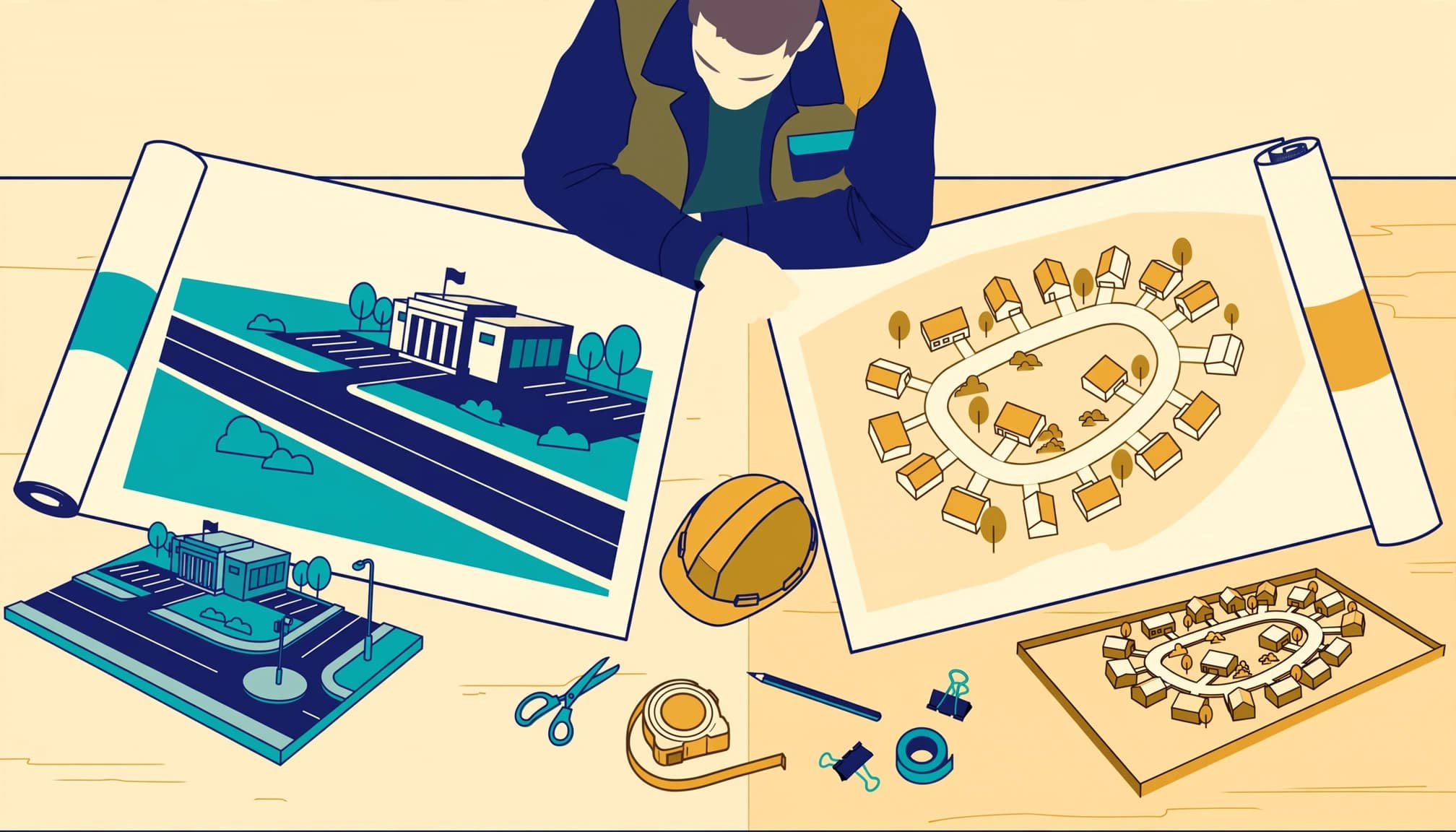
California's definition of public work centers on a work of improvement contracted for by a public entity. The actual contractual arrangement matters.
Review the claimant's contract, the agency's agreements, the bond, property ownership, and any dedication or acceptance documents. These records can affect whether public or private bond rules apply.
A privately owned project may include public improvements. A developer may also agree with a county to build infrastructure before dedicating property.
A California construction attorney needs the underlying documents, not just the project name or a description that calls the job "public works."
What R&R Pipeline Shows
In R&R Pipeline, Inc. v. Bond Safeguard Insurance Co. (2014), R&R contracted in 2008 for storm-drain work on privately owned development property. It sued in 2011, alleging more than $1 million remained unpaid.
The appellate court focused on R&R's contract and the property's status before dedication to Los Angeles County. The developer's separate county agreement didn't establish that R&R's work was public work.
The R&R Pipeline timing analysis contrasts that result with California Paving & Grading Co. v. Lincoln General Insurance Co. (2012), which involved improvements on public streets. These cases show how project facts affect classification, but neither decides every project.
For R&R, classification changed the limitations analysis. The court rejected the short public-work deadline as the basis for barring its claim.
Start With Preliminary Notice
Preliminary notice rules depend on the claimant's tier and who hired them. Civil Code Sections 9300 through 9304 set the requirements for public work.
Laborers and claimants who contract directly with the direct contractor generally don't need to give preliminary notice. For example, a first-tier subcontractor that contracts with the direct contractor is exempt, while a second-tier supplier generally must give notice.
Claimants who must give notice generally need to serve it within 20 days after first furnishing work. A late notice generally protects work furnished during the 20 days before notice and afterward.
Check the current statutory text for required information, recipients, and service methods.
When Preliminary Notice Was Missed
Civil Code Section 9560 provides a separate written-notice route to enforce a public payment bond when preliminary notice wasn't given.
The claimant must notify both the surety and the bond principal within 15 days after recordation of a notice of completion. If no notice of completion was recorded, the deadline is 75 days after completion.
Verify the current statutory text and service requirements before relying on this route.
Calculate the Public Filing Deadline
Two separate deadlines apply: one for required notices and one for a lawsuit. Meeting one doesn't excuse missing the other.

Find the Stop-Notice Period
For public works, first confirm the relevant completion, acceptance, cessation, and recorded-notice facts. Civil Code Sections 9200 and 9356 govern how those facts affect the stop-payment-notice period.
The period generally expires 30 days after recordation of a valid notice of completion, acceptance, or cessation.
If no qualifying notice was recorded, the period generally expires 90 days after cessation or completion. The applicable period depends on the project facts and recorded notices.
Public acceptance and a qualifying cessation of labor can affect completion under Civil Code Section 9200. Your final invoice, last delivery, or punch-list visit doesn't automatically establish that date.
Obtain agency records, including recorded notices and acceptance records. Don't rely on a project manager's estimate of when the job finished.
Add the Bond Lawsuit Period
Under Civil Code Section 9558, a payment bond claimant may sue after it stops providing work. The filing deadline is six months after the Section 9356 stop-payment-notice period expires.
Calculate the periods in order: identify the triggering event, apply the 30-day or 90-day notice period, then calculate the six-month payment bond lawsuit period. Have a California construction attorney verify the dates.
A surety investigation or payment negotiation doesn't automatically extend or pause the court deadline. The statute of limitations can run while the surety reviews a bond claim.
Missing the deadline can bar recovery. Collection calls and promises of payment don't automatically pause the clock.
Private Bond Claims Have Different Clocks
A private-work payment bond doesn't follow the public deadline in Section 9558. Private bond enforcement is addressed in Civil Code Sections 8610 through 8614.
For an unrecorded private bond, the general four-year statute of limitations for a written obligation usually applies. The accrual date depends on the obligation and the claimant's facts.
A bond recorded before completion has a shorter statutory deadline. Civil Code Section 8612 requires an enforcement action within six months after completion.
That exception matters. Saying "private bonds allow four years" without checking recordation can lead to a missed deadline.
Private-work preliminary notices have a separate deadline. Under Sections 8200 and 8204, required notice is generally due within 20 days after first furnishing work.
Section 8204's late-notice rule generally preserves rights for work provided during the 20 days before service and afterward. Earlier work may fall outside that protection.
Private mechanics' liens, stop payment notices, and bond claims also have separate enforcement requirements. Preserving one remedy doesn't necessarily preserve another.
Before choosing a filing deadline, confirm the project classification, bond recordation status, notice history, and completion facts.
Build and Submit Your Claim
A complete claim gives the surety usable evidence and reduces avoidable requests for missing documents. It doesn't resolve disputed contract issues, and submitting a demand doesn't replace a timely lawsuit.
Use this sequence when preparing your claim:
- Get the payment bond. Request it from the awarding public agency. Identify the surety, principal, bond number, project, and bond amount.
- Organize the payment evidence. Include your contract, purchase orders, invoices, delivery tickets, approved changes, payment history, and correspondence about the unpaid balance.
- Document notice compliance. Keep copies of preliminary notices, any Section 9560 notice, and service evidence. Include recorded project notices and agency acceptance documents.
- Submit a written demand. Make a bond claim by identifying the work provided, unpaid amount, party that hired you, and why the surety bond covers the work. Send supporting records to the surety.
- Protect the lawsuit deadline. Have a California construction attorney calculate the applicable dates and file an enforcement action when needed. Don't wait for the surety's investigation to finish.
Keep disputed amounts separate from undisputed invoices. A clear balance helps the surety understand what remains unpaid and why.
Retain copies of everything you send. Phone calls can move a discussion forward, but written records preserve dates, positions, and payment promises.
If you're the bonded contractor, respond promptly with your own records. Explain genuine disputes and document payments rather than relying on a blanket denial.
What Happens After Payment?
The surety investigates coverage, notice compliance, liability, and the claimed amount. A demand doesn't guarantee payment, and the bond amount isn't a guaranteed payout.
Reimbursement and Future Bonding
If the surety pays a covered claim, the contractor may owe reimbursement under the signed indemnity agreement. The agreement's terms determine the contractor's obligations.
The agreement may also cover investigation expenses, legal fees, collateral, and obligations of other indemnitors.
Review those obligations before a dispute grows. A bond protects claimants, while the contractor may remain financially responsible under the applicable agreement.
A paid claim can affect future underwriting. Sureties consider losses, unresolved disputes, financial strength, and the contractor's response when deciding whether to offer more bonding capacity.
Accurate payment records and early resolution of legitimate balances can help protect your next bid.
License Suspension Is Separate
A project payment bond is different from the contractor license bond required by the CSLB. The current license bond amount is $25,000, as listed in CSLB's bond requirements.
A project payment-bond payout alone doesn't automatically suspend your contractor license. CSLB explains that bond cancellation can cause a separate license suspension if timely reinstatement or replacement isn't received before the cancellation period ends. Licensing violations can also lead to a separate process.
Our guide to California contractor license bond requirements explains that licensing obligation. Maintaining your license bond doesn't replace the payment bond required for a public contract.
Frequently Asked Questions
Can I Claim After the Prime Was Paid?
Yes, if you otherwise qualify. The agency's payment to the prime contractor doesn't automatically eliminate an eligible subcontractor's or supplier's rights under a payment bond.
The claim still depends on authorized work, an unpaid covered obligation, required notices, and compliance with applicable deadlines. The surety can investigate disputed quantities, defective work allegations, offsets, and prior payments.
Provide your own payment records. An agency payment report shows what the prime received, but it doesn't establish what you received.
Federal projects located in California follow a different statutory framework under the Miller Act. Don't apply state public-work deadlines solely because the jobsite is in California.
Who Can Claim Against a License Bond?
Eligible consumers and employees may file claims under a contractor license bond pursuant to Business and Professions Code Section 7071.5. Covered circumstances include qualifying contractor-law violations and unpaid employee wages.
An unpaid subcontractor invoice doesn't automatically establish eligibility for a license bond claim. Project payment-bond rights and license-bond rights come from different rules.
License bond claims go to the surety, while a CSLB complaint addresses licensing enforcement. Filing a complaint with CSLB doesn't preserve a separate civil claim deadline.
Use the bond that covers your loss. The $25,000 license bond amount isn't the limit on a separate public-project payment bond.
Protect Your Payment Rights
Your contract tier, notice history, and project completion records determine the next step. Act before the deadline, even when payment discussions are still moving.
Gather the bond and unpaid invoices, then consult a California construction attorney about preserving your claim. For upcoming projects, we help contractors arrange payment and performance bonds that meet required bond forms.
Need bonding for your next public job? Get quote today so your bond requirements are addressed before the bid deadline.