Understanding Bonds Insurance: A Guide for Businesses and Individuals
Introduction
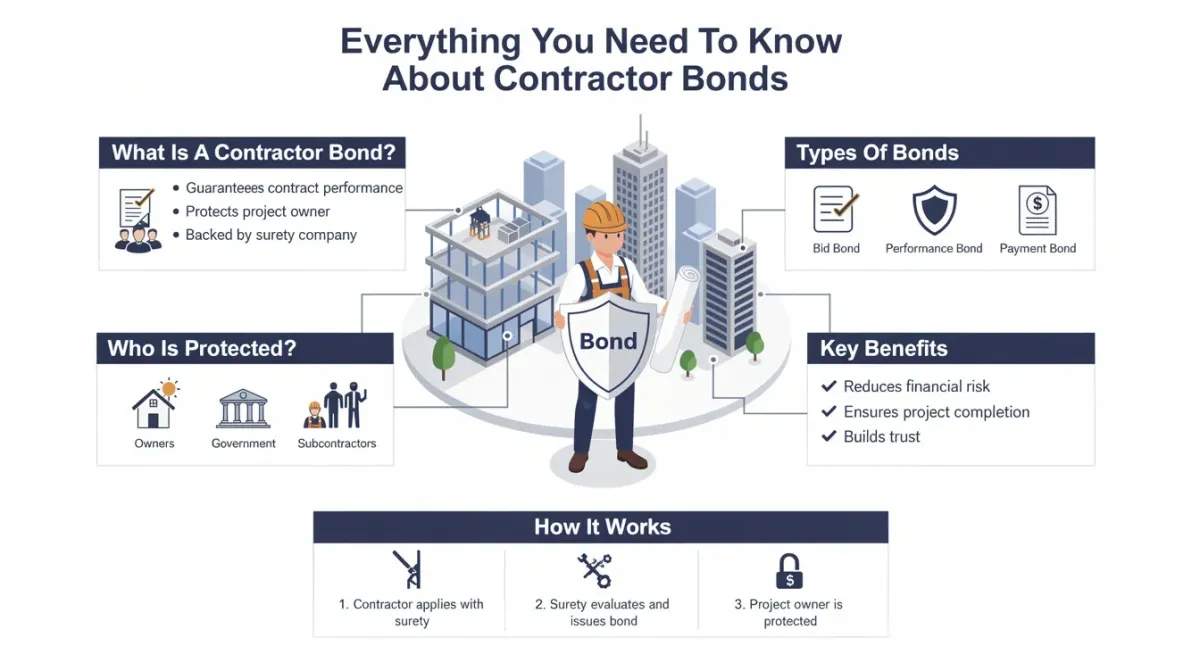
Bonds insurance is a three-party financial guarantee that protects project owners, licensing agencies, and the public when contractors fail to fulfill their obligations. Unlike traditional insurance products that shield the policyholder from losses, a surety bond creates a legally binding promise where a surety company guarantees the contractor will meet specific performance, payment, or licensing requirements.
Bond insurance, often called financial guaranty insurance, is primarily used in the municipal bond market. It offers enhanced security and higher credit ratings for investors by guaranteeing that the principal and interest on a debt will be paid in full and on time, even if the issuer defaults. In this arrangement, the bond issuer purchases a policy from an insurer, and the insurer’s credit rating is applied to the bond instead of the issuer’s own rating. The insurance company (insurer) assumes the risk of the issuer’s default, providing additional protection and confidence for investors.
This guide covers the essential bond types every construction professional needs to understand: contractor license bonds, performance and payment bonds, fidelity bonds, and permit bonds. The content is designed for small to medium contractors seeking licensing compliance, public project eligibility, and comprehensive risk protection in their business operations.
Direct answer: Bonds insurance provides financial guarantees ensuring contractors fulfill their contract and license obligations, with premium costs typically ranging from 1-3% of the bond amount for well-qualified contractors, though rates can reach 5-15% for those with credit challenges or claims history.
After reading this guide, you will:
Understand how the three-party bond structure differs from traditional insurance
Identify which bond types your contracting business requires
Navigate the application process and optimize your bonding costs
Resolve common challenges like poor credit or urgent filing deadlines
Maintain regulatory compliance with state licensing boards
Understanding Bonds Insurance Fundamentals
A surety bond functions as a financial guarantee between three parties, creating an obligation that protects the entity requiring the bond rather than the contractor purchasing it. This fundamental difference from conventional insurance policies shapes everything from premium calculations to claims handling.
The Three-Party Bond Structure
The bond principal is the contractor who purchases the bond and agrees to fulfill specific obligations. When a principal purchases a bond, they’re essentially obtaining a guarantee backed by a third party rather than coverage for their own losses.
The obligee represents the second party in this arrangement—typically a licensing agency like the California Contractors State License Board, a project owner, or government organizations requiring proof of contractor reliability. The obligee receives direct protection under the bond agreement.
The surety is the surety company or bonding company that issues the financial guarantee. Major players in this market include companies listed on the New York Stock Exchange with investment grade ratings. If the principal fails to meet their obligations, the surety compensates valid claims and subsequently seeks reimbursement from the contractor.
This three parties structure ensures project owners and licensing boards have recourse when contractors default, while contractors gain access to work they couldn’t otherwise obtain.
Bonds vs Traditional Insurance
The difference between bonds and traditional insurance creates practical implications for contractors. An insurance policy protects the insured party; when claims occur, the insurance company pays without requiring reimbursement from the policyholder. Premium calculations reflect expected losses across the insurer’s entire customer pool.
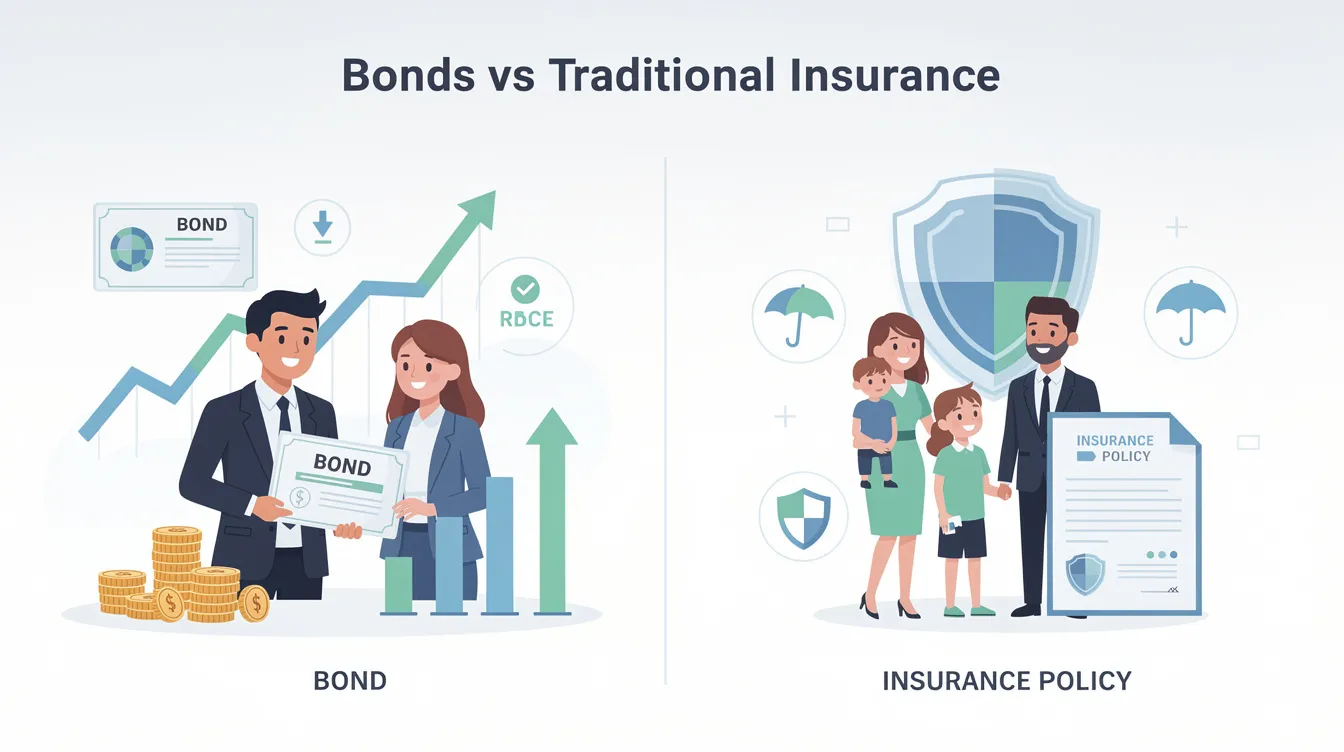
An insurance bond is a contract involving three parties: the principal, the surety, and the obligee, while an insurance policy is a contract between two parties: the insured and the insurance company. Insurance bonds serve as a guarantee to a third party (the obligee) that the principal will fulfill their obligations, whereas insurance policies provide coverage for the insured against financial losses.
Contract bonds operate differently. The surety expects zero losses because if a claim is paid, the contractor must reimburse the surety under an indemnity agreement. This bond obligation means contractors face personal financial exposure beyond just premium costs—any claim becomes a debt owed to the bonding company.
Premium structures also diverge significantly. Insurance premiums reflect actuarial predictions of claims frequency and severity. Bond premiums reflect the surety’s assessment of the specific contractor’s creditworthiness and ability to fulfill obligations. Strong credit and solid business financials result in substantially lower bond costs.
Understanding this distinction helps contractors recognize why sureties scrutinize personal credit scores and financial statements so carefully during underwriting.
Types of Bonds Insurance for Contractors
Building on these fundamental concepts, contractors encounter several distinct bond categories throughout their careers. Each type of bond serves a specific purpose in the construction industry, from initial licensing through project completion.
Contractor License Bonds
License and permit bonds represent the entry point for most contractors. State licensing boards require these bonds as a condition of professional licensure, creating an extra layer of protection for consumers who hire licensed contractors.
Coverage amounts vary by state and trade classification. California’s CSLB requires a $25,000 contractor license bond (increased from $15,000 in January 2023 under Senate Bill 607). The bond of qualifying individual, required when the responsible managing officer owns less than 10% of the company, also requires $25,000. LLCs face an additional $100,000 employee/worker bond protecting employee wages and benefits.
These bonds issued by approved sureties protect customers from contractor misconduct, incomplete work, or non compliance with licensing regulations. Contractors in California must also understand California contractor license bonds and CSLB requirements. Claims against license bonds typically involve consumer complaints about substandard work, failure to pay subcontractors or suppliers, or violations of contractor licensing laws.
Performance and Payment Bonds
Performance bonds guarantee the contractor will complete the project according to contract specifications. Payment bonds ensure subcontractors, suppliers, and laborers receive payment. Together, these contract bonds form the backbone of public works contracting. Performance bonds, contract financing, and liability coverage are crucial for protecting government funds in public construction contracts.
Federal bonds under the Miller Act require both bond types on any federal government construction project exceeding $150,000. The fiscal service and contracting agencies mandate 100% coverage—meaning the total bond amount equals the full contract value, making it critical for California contractors to plan their surety bonding capacity for larger public projects.
State “Little Miller Acts” impose similar requirements on state and local public projects, though minimum amounts and thresholds vary significantly. Some states require bonds on all public contracts regardless of value, while others set thresholds up to $500,000. Municipal bond insurance protects bonds issued by local governments to fund public projects such as schools or roads, ensuring these essential community funds are safeguarded.
Private project owners increasingly require performance and payment bonds as well, recognizing the financial protection and quality assurance these bonds provide.
Fidelity and Miscellaneous Bonds
Fidelity bonds protect against employee dishonesty and internal theft—a different category than surety bonds but often offered by the same surety company. These function more like traditional insurance products, covering financial losses from fraudulent employee acts.
The construction industry uses several additional bond types, and California contractors can access affordable quotes for license, disciplinary, LLC employee, bid, and performance bonds:
Bid bonds guarantee contractors will enter into contracts if awarded, typically covering 5-20% of bid amounts
Maintenance bonds extend warranty coverage after project completion
Permit bonds satisfy local government requirements for specific construction activities
Court bonds guarantee compliance with legal proceedings
When assets are substituted for surety bonds, the substitution process must ensure that the new assets are sufficient to cover the guarantee obligations and protect the government's interests.
Each bond form serves a specific guarantee function, and understanding which bonds apply to your business prevents compliance gaps; this is especially true for the mandatory California contractor bond cost, renewal, and CSLB rules.
Benefits of Bonds Insurance
Bonds insurance delivers significant advantages for contractors and their clients by providing a robust guarantee of performance and regulatory compliance. When a contractor secures a bond, it signals to customers, government organizations, and financial institutions that the business is committed to meeting its obligations and upholding industry standards. This extra layer of security reassures the entity requiring the bond—whether it’s a licensing board or a project owner—that they are protected against financial losses resulting from non compliance, incomplete work, or employee dishonesty.
A surety company stands behind the contractor, guaranteeing that if the principal fails to fulfill their contractual or legal obligations, the surety will step in to cover the loss—up to the bond’s limit. This not only protects the obligee but also encourages ethical business practices and financial responsibility within the construction industry. For contractors, having bonds insurance in place can enhance their reputation, improve their chances of winning contracts, and foster trust with customers and partners. Many rely on providers that specialize in fast, affordable contractor bonds and insurance solutions to streamline this process. Ultimately, bonds insurance is a vital risk management tool that helps ensure compliance, reduce exposure to financial risk, and provide peace of mind for all parties involved.
How to Obtain Bonds Insurance
With bond types clarified, contractors need a clear path through the application and underwriting process. The complexity varies based on bond amount and contractor qualifications.
Application Process and Requirements
Step 1: Determine specific bond requirements. Contact your state licensing board or review project specifications to identify exact bond types, amounts, and approved surety requirements. Federal projects require sureties listed on Treasury Circular 570.
Step 2: Gather financial documents. Sureties evaluate creditworthiness thoroughly. Prepare personal and business credit reports, two to three years of tax returns, current profit and loss statements, balance sheets, bank statements, and a list of active contracts. Trade references and licensing history strengthen applications.
Step 3: Submit application to a licensed surety company or insurance broker. Online platforms increasingly offer streamlined applications with same-day quotes for standard license bonds. Larger performance bonds require more extensive underwriting review.
Step 4: Complete underwriting and receive your bond certificate. For simple license bonds with strong credit, approval may take hours. Complex contract bonds on large projects may require several weeks of financial analysis.
Cost Factors and Pricing
Premium Ranges
Credit and Financials
Business financials matter equally for larger bonds. Working capital, net worth, and the market value of company assets determine bonding capacity—the maximum aggregate amount a surety will guarantee for any single contractor.
Experience and Claims History
Experience level and claims history directly influence pricing. Prior bond claims, licensing violations, or bankruptcy create substantial premium increases. Maintaining clean records protects long-term bonding costs.
Understanding these factors helps contractors position themselves favorably before applying and avoid premium surprises, especially when preparing for evolving California contractor license bond requirements in 2025.
Risk Management for Contractors
Effective risk management is essential for contractors navigating the complexities of the construction industry. Bonds play a central role in this process by providing financial guarantees that protect against a range of risks, including non-payment, project delays, and non compliance with contract terms or regulations, and they should be paired with comprehensive contractor insurance coverage in California. Performance bonds guarantee that the contractor will complete the project as specified, while payment bonds ensure that all subcontractors and suppliers receive timely payment, reducing the risk of liens or disputes. Bid bonds, meanwhile, guarantee that the contractor will honor their bid and enter into a contract if selected, protecting project owners from the risk of default during the bidding process.
By securing the appropriate bonds, contractors not only protect themselves from potential financial losses but also demonstrate their commitment to compliance and reliability, especially when working with specialists in contractor bonds and insurance services. This can be a decisive factor in winning new business, as project owners and government organizations increasingly require proof of bonding as part of their risk management protocols. In addition, bonds can help shield contractors from unforeseen events—such as regulatory changes or natural disasters—by ensuring that obligations are met and stakeholders are protected. In short, bonds are a cornerstone of risk management, providing contractors with the security and credibility needed to succeed in a competitive market, particularly when coordinated with workers' compensation insurance tailored for contractors.
Common Challenges and Solutions
Even well-prepared contractors encounter obstacles in the bonding process. For certain financial instruments like irrevocable letters of credit, non-renewal must be communicated in writing at least 60 days before expiration; otherwise, the instrument is automatically extended for one-year periods, ensuring continuous security coverage. It is also essential to use secure, confirmed e mail communication channels when issuing and verifying letters of credit and related financial instruments. These practical solutions address the most frequent difficulties.
Poor Credit or Financial History
Contractors with credit challenges aren’t automatically excluded from bonding. Specialized surety programs serve credit-challenged contractors, though premiums may reach 5-10% or higher. Some options require collateral or co-signers to secure approval.
Practical steps include: pay down outstanding debts, resolve any judgments or liens appearing on credit reports, maintain clean bank account management, and build cash reserves. Each improvement moves your risk profile toward lower premium tiers.
Urgent Bond Requirements
Time-sensitive situations—bid deadlines, license renewals, or project start dates—require expedited processing. Many sureties and insurance broker networks now offer instant bond issuance for standard license bonds when credit qualifies and documentation is complete.
For urgent performance bonds, establish relationships with sureties before you need them. Pre-qualification allows faster turnaround when specific projects arise.
Complex Filing Requirements
Regulatory agencies have precise requirements for bond form, effective dates, and filing procedures. The California CSLB, for example, requires bonds filed with specific forms and exact coverage amounts. Misaligned dates between license issuance and bond effective dates can trigger automatic suspension.
Professional bond agents familiar with specific state requirements handle these details routinely. Many also share guidance through resources like a contractor insurance and bond insights blog. The time and cost savings often exceed any service fees, particularly for contractors juggling multiple compliance obligations.
Bond Claim Process
When a contractor fails to meet their obligations under a bonded contract, the bond claim process provides a structured way for the obligee to seek compensation. The process typically begins when the obligee notifies the surety company of the issue and files a formal claim. The surety company, often working in partnership with an insurance broker, will then conduct a thorough investigation to determine whether the claim is valid and if the contractor has indeed breached their obligations.
If the claim is approved, the surety company will pay the obligee up to the bond’s coverage amount, ensuring that financial losses are minimized. However, it’s important for contractors to understand that bonds are not traditional insurance—any payment made by the surety must be repaid by the contractor, as outlined in the bond agreement. This underscores the importance of fulfilling all contractual and regulatory obligations to avoid costly claims. Contractors should work closely with their insurance broker or surety company to understand the terms of their bond, the claim process, and their responsibilities, ensuring that any issues are resolved efficiently and in compliance with all requirements.
Dispute Resolution
Disputes can sometimes arise during the bond claim process, particularly if there is disagreement over whether the contractor has met their obligations or if the claim amount is justified. In such cases, the surety company will typically attempt to resolve the issue through negotiation or mediation, working with both the obligee and the contractor to reach a fair outcome. This collaborative approach can often resolve disputes quickly and without the need for litigation.
If negotiation or mediation does not lead to a resolution, the dispute may proceed to court, where a judge will determine whether the contractor is liable and whether the surety company must pay the claim. Throughout this process, it is crucial for contractors to work with an experienced insurance broker or surety company that understands the complexities of bond claims and dispute resolution. By maintaining clear records, adhering to all contractual and regulatory obligations, and seeking professional guidance, contractors can minimize the risk of disputes and ensure that any claims are handled smoothly and efficiently, protecting both their business and their reputation.
Conclusion and Next Steps
Bonds insurance serves as an essential risk management tool for contractors at every stage of business growth. From initial licensing through major public contracts, understanding how to obtain and maintain appropriate bonding protects both your business interests and your ability to compete for work. Insured bonds are generally perceived as lower risk, making them easier to sell in the secondary market. It is also important to maintain the government's interest through bonds and insurance policies, as the government’s interest directly influences requirements for performance bonds and insurance coverage to ensure adequate financial protection.
Immediate action steps:
Audit your current bond requirements against state licensing rules and contract specifications
Gather updated financial documentation including credit reports and tax returns
Request quotes from multiple surety providers to compare rates
Establish relationships with bond professionals before urgent needs arise
For comprehensive contractor protection, bonds insurance works alongside general liability coverage, workers’ compensation, and specialized construction insurance products. Understanding how these pieces fit together creates a complete risk management strategy.
Additional Resources
California CSLB Bond Requirements: Visit cslb.ca.gov for current bond amounts and filing procedures
Treasury Circular 570: Lists approved sureties for federal government projects
State Little Miller Act Database: Research your state’s public works bond thresholds
Rating Scales for Financial Institutions: Rating scales from recognized agencies (such as AAA, BBB, or Baa) are used to assess and verify the creditworthiness and financial stability of financial institutions issuing or confirming irrevocable letters of credit, ensuring they meet investment grade criteria.
Contractors should establish bond renewal reminders at least 60 days before expiration dates to prevent compliance gaps. Credit monitoring services help identify issues before they affect premium rates.